Monday, May 28, 2012

Valencia


L'Oceanografic of Valencia

The province of Valencia, is located in the centre of the Spanish Mediterranean coastline; It is also opposite the Balearic islands and equidistant from the Madrid and Barcelona. 
Valencia is the most densely populated town in the region as it is encircled by a wide belt of medium-sized districts with an average density of 1,600 inhabitants per square kilometre.
Sightseeing around the city begins in the old quarter, there are many buildings: Torres de Serranos, the spacious Torres de Quart and some remains of the apron wall in the basement of the Valencia Institute of Modern Arts (IVAM). The most spectacular artistic heritage is the one found in the districts of Seu and Xerea, where the marks left by the Romans have been hidden below Arab ruins and modern churches and palaces.
The Mercat district is characterized by trading life, its most emblematic buildings are used for trading purposes.
The Gothic building of La Lonja, was declared by UNESCO as a universal heritage monument, has a beautiful columned room where the old tables on which trading transactions are still in use today. Outside the destroyed wall grew the bourgeoisie, with its wide pavements, broad landscaped streets and many building of modernist architecture.   
The futuristic face of the city is mirrored on the old riverbed through the Gulliver Children's park and the leisure and culture complex, the City of Arts & Culture.  Life in the city includes to the seafront with the harbour and the beaches of "las Arenas y La Malvarrosa".
L'Oceanografic of Valencia is a important place.
If you are traveling to Valencia via Barcelona, don't forget visit to Catalan capital. Although both are located on the Mediterranean Coast, each city has a different cultural appeal. For example, Valencia city  has its Institute of Modern Art, but Barcelona city has the Gaudi Museum. The Best Western hotel is situated only three kilometers from the airport.   Valencia is a large city.  The city has many hotels.
For saving money you can stay in one of the budget hotels in Valencia and  spend on another fun things.

Sunday, May 20, 2012

Alicante:

Alicante is a charming city. It is located in a beautiful setting; in the same city are wonderful beaches, many parks, urban care and beauty that unfold around a mountain.
This, coupled with a mild weather with many hours of sunshine a year, makes Alicante offers a high quality of life for its inhabitants, which is reflected in the friendly and relaxed character who welcomes visitors.
Alicante invites you to stroll and learn about its monuments.  The Council offers free guided tours even.
Places:
“La Basilica De Santa María”:   The oldest church.  It is Gothic art.
 “La Concatedral De San Nicolas De Bari”.  Renaissance.
“ El Monasterio de la Santa Faz”. It is located 5 km north of the village, is a beautiful and sober stone building with beautiful ornaments, which has an interesting history.
 “La Casa de La Asegurada”  , The oldest civil building in the city, which houses the Museum of Contemporary Art of Alicante.
“El Museo Arqueológico  Provincial”.  This exhibits archaeological pieces all ages of the whole province.
“ La Casa Consistorial o Ayuntamiento “ (eighteenth century), beautiful building located at 0 m. above sea level, is the benchmark for measuring the altitude of any point of Spain.
“El Palacio Gravina” (eighteenth century), Sample regional painting and sculpture from the sixteenth to early twentieth centuries.
 “El Mercado Central de Alicante” (XX c), beautiful modernist building was erected on the eighteenth century wall around the city.

Tuesday, December 27, 2011

Barcelona:

                                                                         "Barrio Gótico":
Montjuic:
"Agbar Tower":
"La Pedrera":
"La sagrada familia":


With 1,619,337 inhabitants in 2010, after Madrid is the second most populous city in Spain. The metropolitan area of ​​Barcelona, ​​including Barcelona Urban Region has 5,029,181 inhabitants in 2011.

Is Located on the shores of the Mediterranean Sea, 120 km south of the Pyrenees mountain chain and the border with France. It has been the scene of various world events that have given international exposure. The most important have been the Universal Exhibition of 1888, the International Exhibition of 1929, the Summer Olympic Games 1992 and the Universal Forum of Cultures 2004. It Hosts the Secretariat of the Union for the Mediterranean.

Barcelona is recognized as a global city for its cultural, commercial, financial, and tourism. Has one of the largest ports in the Mediterranean and is an important point of communication between Spain and France, due to motorway connections and high-speed train. It's a very touristy town with a Mediterranean climate.

Barcelona Trade Fair

The Fira, Barcelona trade fair, organized numerous exhibitions, shows, congresses and fairs for professionals, some of which are among the first in the world, such as the Mobile World Congress is the world's largest in its sector, the urban fashion fair Brandery. These and other shows makes it one of the most important fairs in Europe and first in Spain with more than 3.5 million visitors annually, also generate a great activity for hotel and restaurant sector with the incentive of uniformly distributed throughout the year.

Places: “La Sagrada Familia”, “la Pedrera” y “el Pueblo Español”, “Montjuic”, “Barcelona Villa Olímpica”,  Barrio gótico”,  Plaza Real”.

Thursday, September 22, 2011

Sevilla

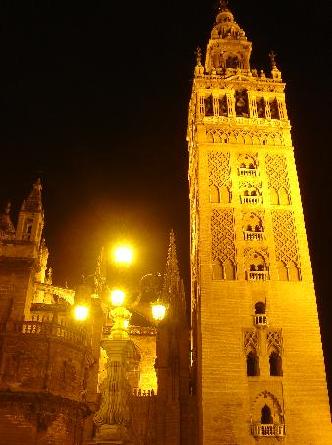
In Seville, there are many attractions that your children would love, such as the Museum of Flamenco. Spectacles, parts and bright objects ... If you walk in Seville, and imagine that you walk  for a medieval city, with its Giralda, the "Torre Del Oro" and "the beautiful Cathedral", may be sure you would like.  You can book a Seville hotel, and your children will thank you.
The civil architecture of Seville its  beauty and variety .  The city has played an important role in history.  Passed through it different peoples and cultures and many chose as the capital of the kingdom.  After the discovery of America its port became the largest in Europe and the numerous treasures came from the New Continent.
Due to its important role throughout history, buildings were constructed as relevant as the Torre Del Oro, Alcazar, Town Hall, Archive of the Indies, Palacio De San Telmo, Tobacco Factory...
Interesting places:
Guadalquivir River, Art Galleries and Exhibition Halls, A walk by San Fernando Cemetery, Seville Bridges.

Saturday, September 17, 2011

Tourism in Spain:


Tourism today is one the most important pillars of Spain´s economy.   In past decades was promoted almost exclusively the sun and beach tourism due to its climate much warmer and sunnier compared with other European countries.   Summer temperatures range from 20 to 40 degrees and many regions enjoy over 300 days of sunshine a year.   Many coastal regions have a large number of hotels, restaurants and apartment buildings facing the beach.
The northern region of Spain has a climate a little cooler and wetter.  Many Spanish and foreign tourists are attracted each year by the “Camino De Santiago” or the “festival of San Fermin”.   In its beautiful landscapes we find cliffs, as well as quiet and secluded beaches.   This area combines rural tourism with immense sandy beaches with pleasant climates in summer and in the “ Rías Baixas gallegas”.  The reason for tourism in the north is the beauty of the area (geography, Galician, Cantabrian coast,  Picos De Europa, etc.) and the rich and varied cuisine, and this is very wide and varied, with typical dishes such as paella, Madrid stew, the stew, Iberian ham, shellfish or fish.   Olive oil, of which Spain is the largest producer in the world, used in a wide variety of dishes and was appreciated in other countries